
2026 Speaker Faculty
2026 Speaker Faculty
A cross-sector lineup of clinicians, military leaders, researchers, and advocates shaping the future of brain health policy and practice.
Hear firsthand from leaders confronting the realities of repetitive brain trauma and advancing solutions for future generations.
Read Full Bio
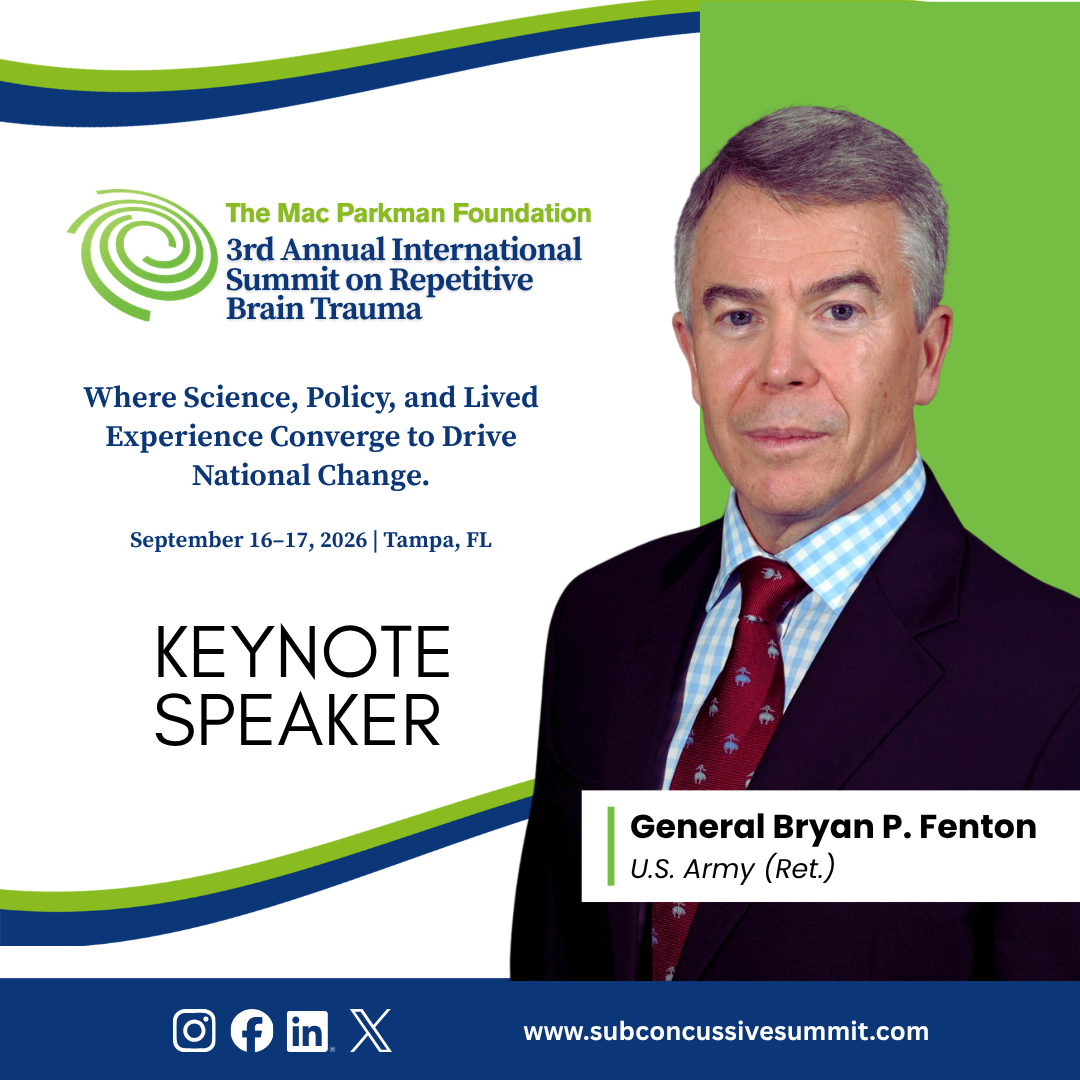
General Bryan P. Fenton is a retired U.S. Army Four-Star General and career Special Forces officer.
He served as the 13th Commander of U.S. Special Operations Command (USSOCOM), overseeing the global Special Operations of the U.S. Department of Defense, with command of 70,000 Army, Navy, Air Force, and Marine Special Operations personnel.
A people-first leader, Bryan champions optimizing human performance through wellbeing initiatives across cognitive, physical, and behavioral health areas.
Prior to his role at USSOCOM, General Fenton was the Commander of the Joint Special Operations Command (JSOC) and served as the Senior Military Assistant (SMA) for two U.S. Secretaries of Defense. With years of military service, he commanded at every level of Special Operations, deploying multiple times to Afghanistan, Iraq, and numerous locations across the globe. General Fenton brings a wealth of experience in the acquisition and implementation of emerging technologies within the commercial and defense sectors. He is recognized for his expertise in strategic vision, organizational change management, and guiding transformation for large organizations. He currently serves as a Board Member for Duke University’s Fuqua Business School/Coach K Center on Leadership and Ethics (COLE).
An accomplished public speaker, he has presented at prominent forums including the Aspen Security Forum, the Reagan National Defense Forum, and the NFL Owner’s Conference Medical Performance Summit. General Fenton graduated from the University of Notre Dame and holds a master’s degree from the U.S. Army Command and Staff College.
Read Full Bio
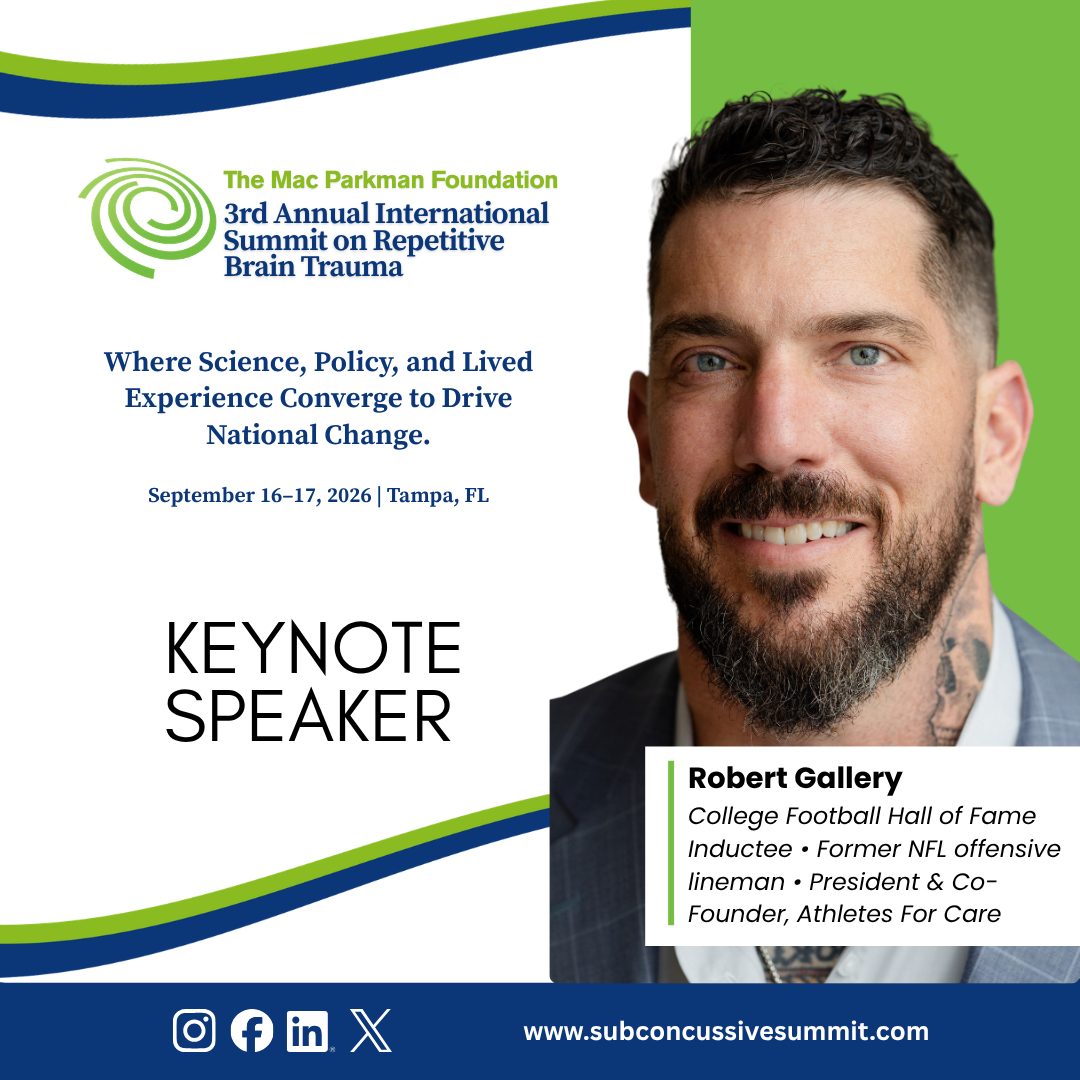
Robert Gallery is a distinguished former professional football player, 2023 College Football Hall of Fame inductee, and now a passionate advocate for athlete mental health as President and Co-Founder of Athletes For Care.
After suffering severe brain damage from hundreds of concussions and battling alcohol dependency during his eight-season NFL career, Gallery found healing through ibogaine treatment. Today, he dedicates himself to supporting former athletes navigating life after sports, connecting them with resources for injuries, chronic pain and substance use recovery. His powerful personal journey and professional expertise make him a compelling advocate for innovative approaches to healing and recovery.
At the University of Iowa, Gallery transformed from a tight end into one of the most dominant offensive linemen in college history, earning unanimous All-American recognition and the 2003 Outland Trophy. Selected second overall in the 2004 NFL Draft by the Oakland Raiders, he played eight seasons professionally with the Raiders and Seattle Seahawks.
Behind the accolades, Gallery endured severe brain damage from hundreds of concussions throughout his career. This trauma, coupled with alcohol dependency, created significant challenges in his post-playing life. Four years ago, Gallery underwent ibogaine treatment — an experience he credits with saving his life and transforming his recovery journey.
Today, Gallery channels his personal experience into helping others through Athletes For Care, a foundation he co-founded to support former athletes with navigating life after sport. The organization connects individuals with resources for traumatic brain injuries, chronic pain management, and substance use recovery. His story stands as a powerful testament to the potential of innovative treatments for those struggling with TBI, substance use disorders, and co-occurring mental health issues.
A native of Masonville, Iowa, Gallery combines his elite athletic background with his education degree and profound personal recovery journey to offer unique insights on resilience, healing, and transformation. His experience transitioning from the challenges of post-career trauma to becoming an advocate for others provides valuable lessons applicable across professional domains.
Robert Gallery brings authentic expertise and compelling lived experience to his speaking engagements, delivering powerful content for audiences seeking to understand athlete health, innovate recovery approaches, and the journey from trauma to purpose.
Read Full Bio
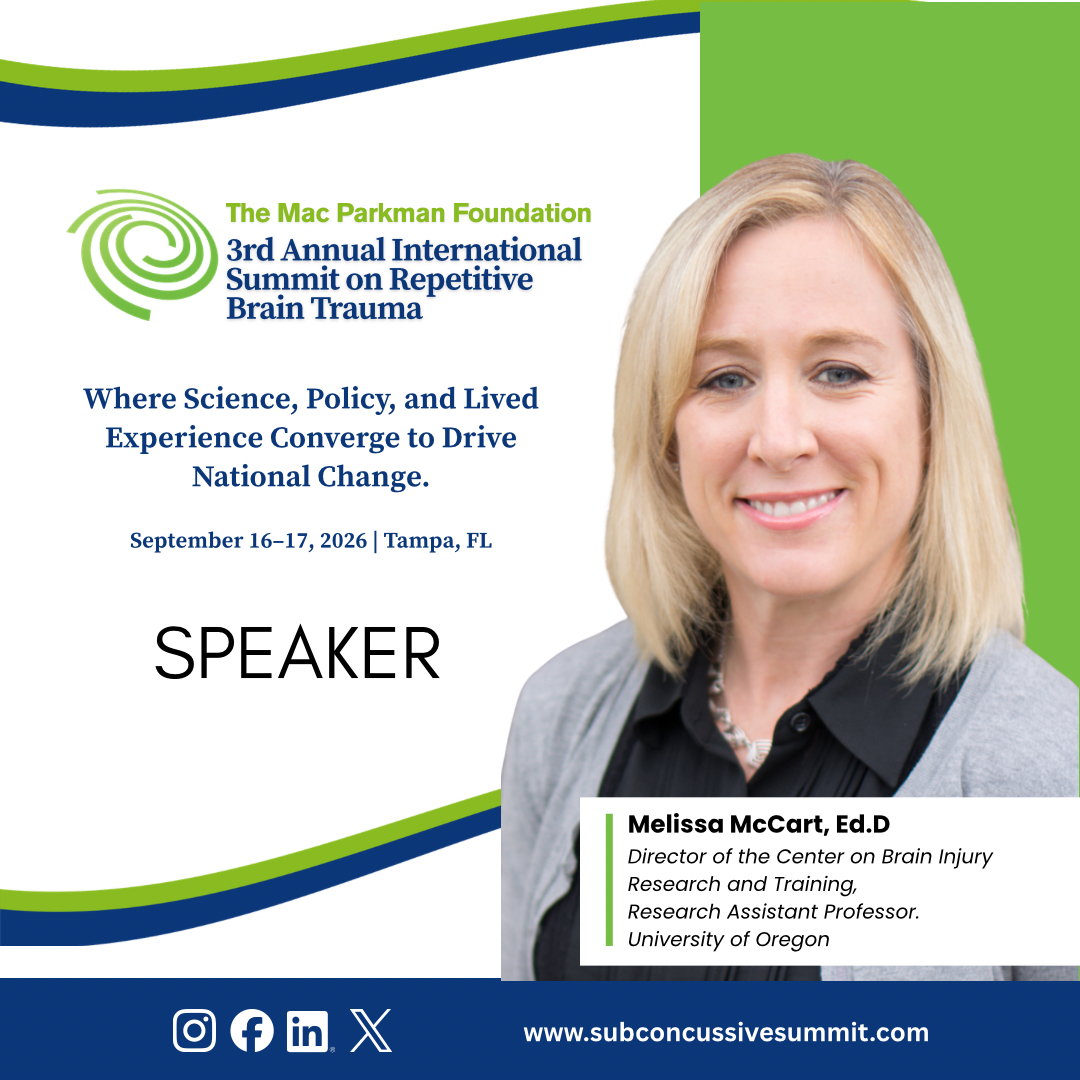
Melissa McCart, Ed.D., is Director of the Center on Brain Injury Research and Training at the University of Oregon and a Research Assistant Professor.
She is a national and
international speaker and author on brain injury, return to school, educator training, and educational policy.
Dr. McCart earned her doctorate in Educational Methodology, Policy,
and Leadership, her master’s degree in behavioral disabilities, and administrator
licenses from the University of Oregon. Her professional background includes
experience as a special education teacher, behavior consultant, behavior specialist, and
school administrator.
Her work supports children, families, educators, and professionals
affected by traumatic brain injury.
Read Full Bio
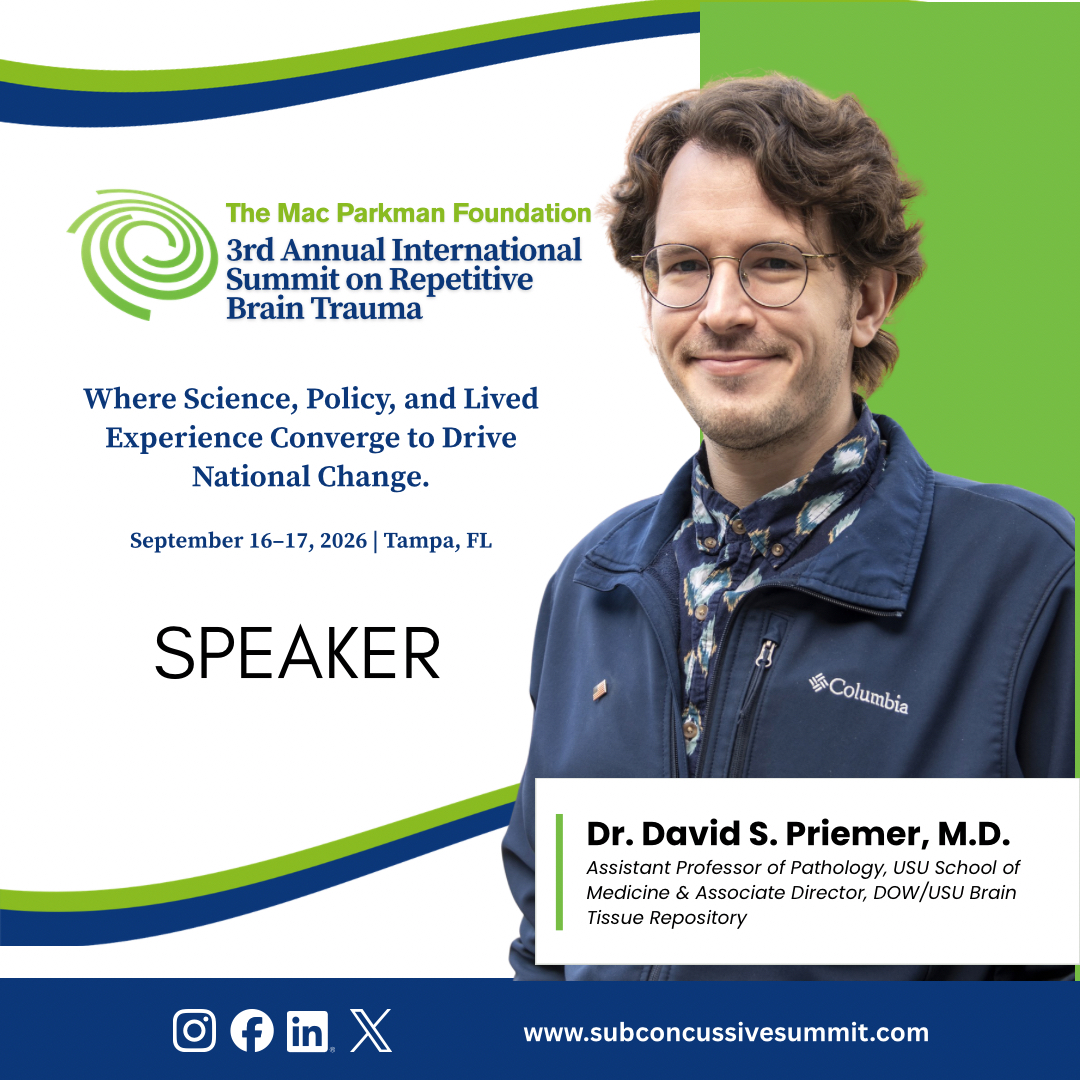
David S. Priemer is an Anatomic Pathologist and Neuropathologist who is board-certified in both fields by the American Board of Pathology.
David serves as an Assistant Professor of Pathology at the Uniformed Services University F. Edward Hébert School of Medicine and as the Associate Director of the Department of Defense/Uniformed Services
University Brain Tissue Repository, a brain bank that collects, examines, preserves, and researches brains donated from deceased military service members, with a mission of studying military brain health.
Prior to joining the Uniformed Services University, David attended medical school
at the Saint Louis University School of Medicine and received his M.D. in 2015. This was followed by pathology training at the Indiana University School of Medicine from 2015-2019. During his training, David developed special interests in neurodegenerative disease, traumatic brain injury, forensic neuropathology,
and general autopsy pathology. Following training, David served as junior attending faculty (instructor) in the Division of Autopsy at the Johns Hopkins School of Medicine Department of Pathology.
This was during the academic year of 2019-2020, thus in the height of the COVID-19
pandemic, and David was active in performing many of the earliest comprehensive autopsies of COVID-19 victims in Maryland, if not the United States.
David has published a variety of peer-reviewed manuscripts in the fields of neuropathology,
autopsy pathology, and surgical pathology. He has presented numerous studies as poster and
podium presentations at national and international scientific meetings, and maintains active research interests in neuropathology (traumatic brain injury, neurodegeneration, forensic
neuropathology) and autopsy.
Finally, David is a committed pathology educator, with several years and more than 300 hours of formal teaching experience with medical and dental students in lecture, laboratory, small-group/discussion settings and covering material that runs the gamut of pathology in all of the
body systems.
Read Full Bio
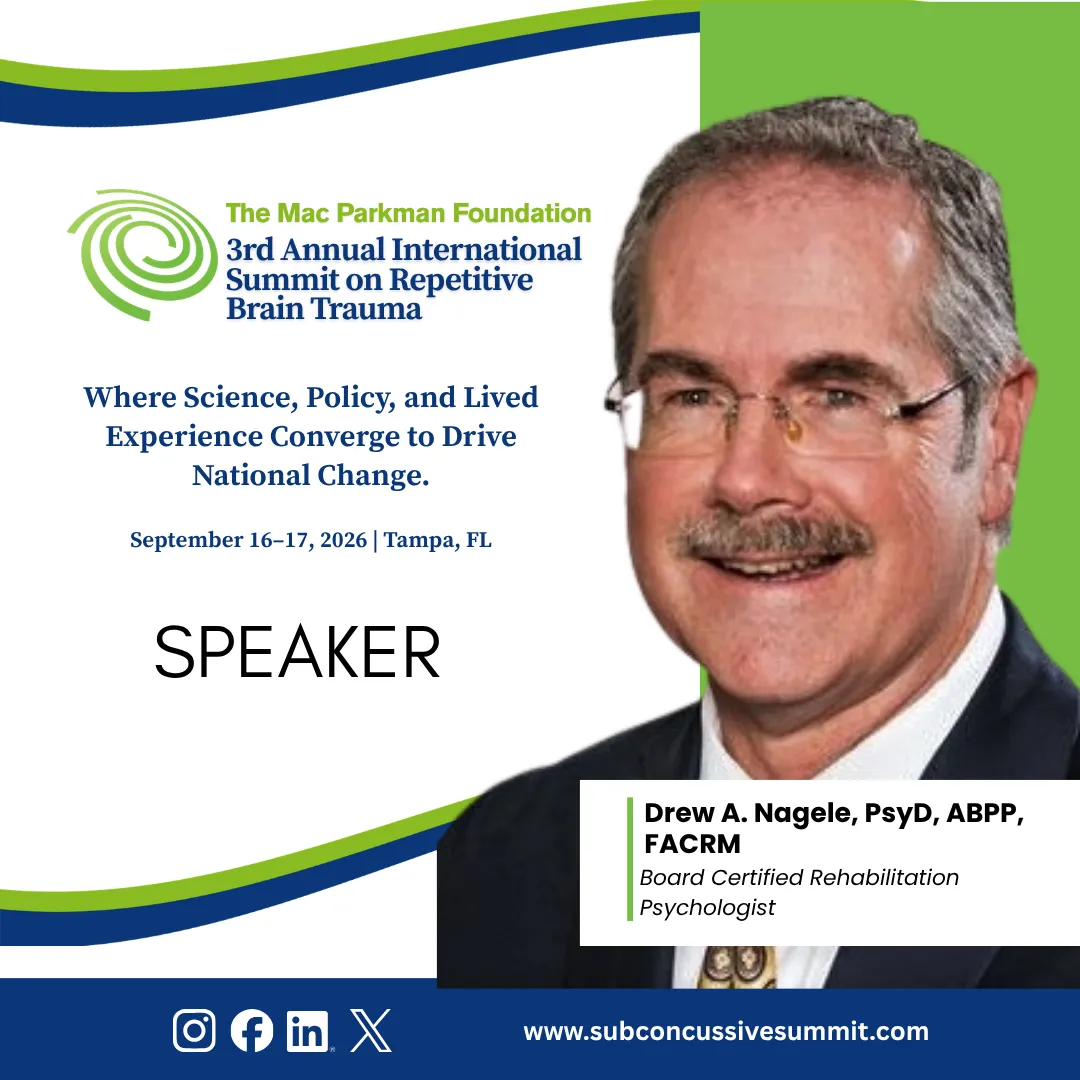
Dr. Drew Nagele is a Board Certified Rehabilitation Psychologist trained in
NeuroRehabilitation with a 40+ year career in creating and running brain injury
rehabilitation programs for children, adolescents, and adults with acquired brain
injury.
He chairs the Advanced Practice WorkGroup for the Brain Injury
Association of America's Academy for Certification of Brain Injury Specialists
(ACBIS).
Dr. Nagele is Co-Principal Investigator on 3 federal grants working with
brain injury in schools, prisons, and NeuroResource Facilitation. He is Clinical
Professor at the Philadelphia College of Osteopathic Medicine (PCOM) teaching
Neuropsychology, Neuropathology, and Cognitive Rehabilitation.
Read Full Bio
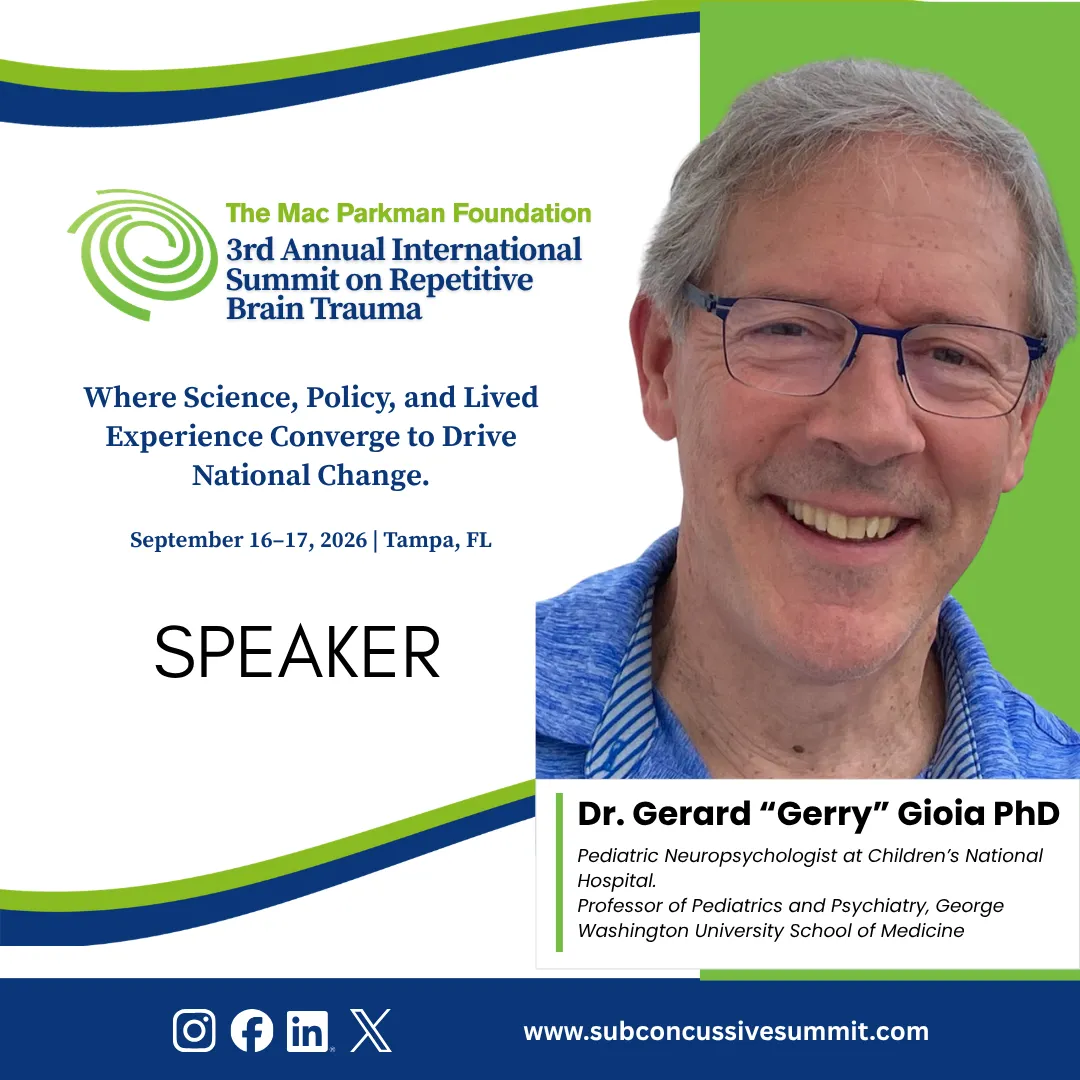
Dr. Gerard "Gerry" Gioia is an internationally recognized pediatric neuropsychologist and director of the Safe Concussion Outcome, Recovery & Education (SCORE) Program at Children's National Hospital, and a Professor of Pediatrics and Psychiatry at George Washington University School of Medicine.
A leading voice in sports concussion, he has participated in the International Concussion in Sport Group consensus meetings and the American Academy of Neurology guideline panel, and is a past President of the Sports Neuropsychology Society.
He developed the widely used Acute Concussion Evaluation (ACE) tool and serves youth, high school, collegiate, and professional teams, including as team neuropsychologist for the NFL's Baltimore Ravens and NHL’s Washington Capitals.
Who will be in Attendance
This event brings together people from varied industry and professions, all in the interest of advancing brain health.
Brain Health Advocates
Scientists & Clinicians
Military & Veteran Families
Policymakers
Athletic Coaches & Trainers
Educators
Youth Sports Organizations
Survivor Families